Showing posts with label Sanctuary. Show all posts

Saturday, 8 October 2011

Aralam Wildlife Sanctuary


The Aralam Sanctuary is spread over 55 sq km of undulating forested highlands on the slopes of the Western Ghats. The highest peak here - Katti Betta - rises to a majestic 1145 m above sea level. Aralam Wildlife Sanctuary was established in 1984. The Aralam Wildlife Sanctuary covers an area of 55 square km.
Covered with tropical and semi evergreen forests, the Aralam Sanctuary is home to a vast variety of flora and fauna endemic to the Western Ghats. Elephant, gaur, sambar, spotted deer, barking deer, Nilgiri langur, Hanuman langur, Malabar giant squirrel, etc can be seen here.

The vegetation in the Aralam Wildlife Sanctuary consists of coast tropical evergreen forest and west coast semi evergreen forest. There are about 490 hectares of teak and eucalyptus plantations within the forest area.
 
Aralam, a village in Thalasserry, is also noted for the Central State Farm, a 3060 hectare farm started in 1971 by the Government of India. This is one of the main production centres of hybrid coconut seeds in the country.

 Location: About 35 km from Thalasserry railway Station.

Wayanad Wildlife Sanctuary

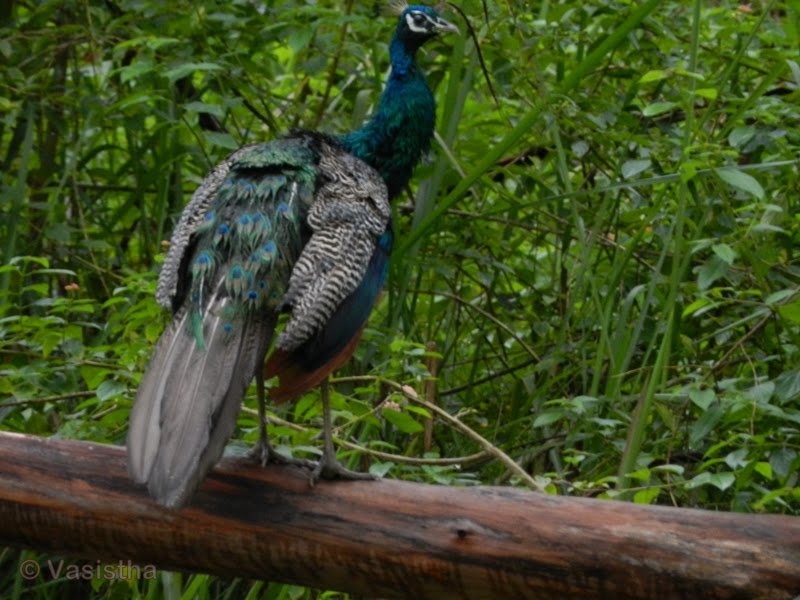
Wayanad Wildlife Sanctuary is an animal sanctuary in Wayanad, Kerala, south India. It is on the way from Mysore to Sultan Battery. Wild animals such as Indian Bison, elephant, deer and tiger has been spotted. There are also quite a few wild birds in the sanctuary.Peacocks and Peafowl tend to be very common in the area.

Wayanad Wildlife Sanctuary is the second largest wildlife sanctuary in Kerala. It is bestowed with lush green forests and rich wildlife. Also known as the Muthanga Wildlife Sanctuary, this wildlife area houses some of the rare and endangered species of both flora and fauna.

Established in 1973, the sanctuary is now an integral part of the Nilgiri Biosphere Reserve. It’s bounded by protected area network of Nagarhole and Bandipur of Karnataka in the northeast, and on the southeast by Mudumalai of Tamil Nadu.

It is part of the Wayanad plateau and the vegetation is predominantly of the south Indian moist deciduous teak forests. Also, the sanctuary has pastures of the west-coast semi-evergreen trees. The wildlife sanctuary comes under Protect Elephant and one can spot herd of elephants roaming in the area.

Elephant rides are arranged by the Forest Department,Kerala. Discovering and observing the wildlife while being atop an elephant is an enthralling and unforgettable experience. Wayanad district has the largest population of aborigine people in Kerala. The native aadivasis mainly consist of various sects like Paniyas, Kuruma s, Adiyar s, Kurichya s, Oorali s, Kattunaikkan s etc. Comprising an area of 2126 km2, Wayanad has a powerful history. Relicts and edicts found in various parts of Wayanad speak of an importatnt prehistoric era. Historians are of the view that organised human life existed in these parts, at least ten centuries before Christ.


The sanctuary is part of the Nilgiri Biosphere Reserve. The Western Ghats, Nilgiri Sub-Cluster (6,000+ km²), including all of the sanctuary, is under consideration by the UNESCO World Heritage Committee for selection as a World Heritage Site.[1]

Wayanad climate is salubrious. Average rain fall in this district is 2322 m.m. Annual rain fall in these high rain fall areas ranges from 3,000 to 4,000m.m. High velocity winds are common during the south west monsoon and dry winds blow in March-April. High altitude regions experience severe cold. This place experiences a high relative humidity which goes even up to 95 per cent during the south west monsoon period. Generally, the year is classified into four seasons, namely, cold weather, hot weather, south west monsoon and north east monsoon. The dale, 'Lakkidi', nestled among the hills of Vythiri taluk has the highest average rainfall in Kerala.


Location: Wayanad Wildlife Sanctuary is located 16 km east of Sulthan Bathery in the state of Kerala.

Friday, 3 June 2011

Parambikulam Wildlife Sanctuary

                                                                           Nestled in the valley between the rows Anamalai of Tamil Nadu and Kerala Nelliampathy ranges of the majestic Western Ghats is Parambikulam Wildlife Sanctuary.This pristine valley that is proud of Palakkad district is a glorious tribute to untouched container ports nature.The several variants the aquatic fauna, including crocodiles assailant, who are often seen sunbathing along its banks.
Deer
         Parambikulam Wildlife Sanctuary is the most protected environment for Anamalai subunit of the Western Ghats, surrounded on all sides by protected areas and sanctuaries of Kerala and Tamil Nadu, the sanctuary has a flora and fauna that are peninsula well preserved due to the full protection of minimum human intervention. The sanctuary is a major ecological continuum Peechhi through substantial aid Eravikulam Anamalai viable populations of wildlife. It houses various breeds of indigenous peoples who are equally good part of the existing harmonious ecosystem. The thick, rich habitat sanctuary supplys abundant water make it a habitat for wildlife and therefore for the tourist who may have fond memories of watching animals and being in the bosom of nature.
Wild Cat
Western Ghats is one of 34 global biodiversity hotspots. Considering the abundance of wildlife and natural beauty adorable Parambikulam Wildlife Sanctuary is perhaps the most interesting part of the wildlife in the entire stretch of Western Ghats. Therefore, it is popularly venerated as a "house of Nature." Has a total area of ​​285 sq.km
Buffalo

Location: About 40 km from Mannarkkad in the district Palakkad. From Palakkad - 100 km, From Coimbatore (Tamil Nadu) - 84 km, From Pollachi (Tamil Nadu) - 38 km.

Wednesday, 1 June 2011

Mangalavanam Bird Sanctuary

Mangalavanam Bird Sanctuary
               Mangalavanam is an environmentally sensitive area in the central Indian city of Kochi. It is located behind the building of the High Court of Kerala. It is a nesting site for a variety of migratory birds and supports many varieties of mangroves. It is a popular bird sanctuary frequented by tourists, bird watchers, ornithologists and residents. The Managalavanam is often regarded as the green lung of Kochi, given its role in the maintenance of air pollution in the city under control. The area is a resting place for many species of resident and migratory birds. But recently, high-rise buildings in the vicinity of hindering the movement of birds in the bird sanctuary Mangalavanam. The buildings near the shrine of the correct orientation of the interruption, the takeoff and landing birds. Also cause obstacles in the regular movements of birds that nest in the nesting material transport.
It is also likely to hamper the movement of birds as food availability for chicks and chicks. Administrative control of the shrine is the director of wildlife, then Peechi Assistant Wildlife Warden, Peechi - Vazhani wildlife sanctuary.
Once a wooden yard also operated in this area, and the wood exported to foreign countries. But today, this activity is not here. A guest house is located in this area has been modernized in 1986 and current employees have been designated to protect birds in this sanctuary. Tourists flock to bird sanctuary Mangalavanam established guest house of the forest, the host government, houses of people with disabilities break and cabins of many private schools in Ernakulam.
A View from Mangalavanam Bird Sanctuary
True mangrove species and mangrove associates in the sanctuary there are Avicennia officinalis, Rhizophora mucronata, Acanthus ilicifolius Acrostichum aureum and are important for species conservation. Among the species recorded ilicifolius acanthus is considered endangered and vulnerable as Rhizophora mucranata according to IUCN.

In a recent study showed that a total of 6 species of mammals Indian flying fox, bat painted three [[chipmunk palm - Dusky Palm Squirrel, Rat Black house-rat, and Bandicota Eurasian otter. Two species of amphibians limnocharis Limnonectes and Duttaphrynus melanostictus, and seven species of fish Anabas testudineus, panchax striped chromID Orange suratensis Etroplus, Malabar Swamp Eel, Black Rasbora and Sarotherodon mossambica.

Mangalavanam is primarily a refuge for birds. Bird survey in May 2006, it was found that there were 194 birds of 32 species. During the investigation in 2006, recorded 17 species of butterflies in this area. 51 species of spiders are 40 genera of 16 families have been recorded here. This represented 27% of all households reported from India.

Location: It is located at distance of 6km fromKochi.
Details: Best season to visit the sanctuiary is from January to March.

Tuesday, 31 May 2011

Thattekad Bird Sanctuary

A view from the Sanctuary
              Thattekad Bird Sanctuary is famous  for  the large varieties of bird species. This sanctuary is now known as the "Salim Ali Bird Sanctuary" as an honour for the renowned bird scientist, Salim Ali. It is located at  an latitude 76deg. '40-76 deg.45 'N latitude and 10deg. 7'-11 degrees. E. The bird sanctuary is located in Kothamangalam Taluk of Ernakulam district on the north bank of the river Periyar. At the height of 35-523m above sea level, this wonderful bird sanctuary sits atop Njayqapilli. 13 km northeast of Kotyhamangalam, Thattekkad Bird Sanctuary is home to some of the rarest bird species in India.
          Thattekkad Bird Sanctuary has a tropical climate. The annual rainfall is 3000mm recorded here throughout the year. The climate is pleasant throughout the year, when the monsoon comes to this place in the months between May and July. It would be advisable to visit this park during the monsoon as most of the area becomes inaccessible here. Thattekkad is famous for its birds only. 
A view from the Sanctuary
Among the animals found here, the elephant is an occasional visitor. Leopard, bear, porcupine, python and cobra can also be seen here. Rare birds like crimson throat Barbet, Bee-eater, Sunbird, Shrike, Kite Blackwing, herons and night herons are also commonly observed. India roller, cuckoo, common snipe, pheasant in flight, jungle nightjar, kite drongo, gray, Malabar Trogon, Woodpecker, laundress of various colors, soft sparrow, Grey jungle fowl, Indian Hill Myna, Robin bird, jungle babbler and cormorants are common birds found some here.
Way to the Sanctuary
 

Location: Located at distance of 42 km from Ernakulam town. And 110 km from Munnar.

Periyar Wild Life Sanctuary


Boating In the Sanctuary
                    Periyar is a protected area, and a nature reserve in the South Indian State of Kerala, set high in the mountains of the Western Ghats along the border with Tamil Nadu. It lies in the districts of Idukki and Pathanamthitta. The protected area covers an area of 925 km², out of which a 350 km² part of the core zone was made into the Periyar National Park and Tiger Reserve, sometimes dubbed the Periyar Wildlife Sanctuary. The park is often called by the name thekkady also. Thekkady is located four km from Kumily, approximately 100 km east of Kottayam, 110 km west of Madurai and 120 km southeast from Kochi.
The area bears a large variety of flora and fauna. Four species of primates are found at Periyar - the rare lion-tailed macaque, the Nilgiri Langur, the common langur, and the Bonnet Macaque.  Other mammals found here include gaur,Bison, sambar (horse deer), barking deer, mouse deer, Dholes (Indian wild dogs), mongoose, foxes and leopards. Also inhabiting the park, though rarely seen, are the elusive Nilgiri tahr.
Periyar Lake
The Periyar protected area lies in the middle of a mountainous area of the Cardamom Hills. In the north and the east it is bounded by mountain ridges of over 1700 metres altitude and toward the west it expands into a 1200 meter high plateau. From this level the altitude drops steeply to the deepest point of the reserve, the 100 meter valley of the Pamba River. The highest peak is the 2019 meter high Kottamalai.
The sanctuary surrounds picturesque 26 km² Periyar lake, formed by the building of Mullaperiyar Dam in 1895. This reservoir and the Periyar River meander around the contours of the wooded hills, providing a permanent source of water for the local wildlife.
Periyar Wild Life Sanctuary
The temperature varies depending upon the altitude and it ranges between 15° Celsius in December and January and 31° Celsius in April and May. The annual amount of precipitation lies between 2000 and 3000 mm. About two thirds of the precipitation occurs during the southwest monsoon between June to September. A smaller amount of precipitation occurs during the northeast monsoon between October and December.
Location: It is located 4km from Kumily, approximately 100 km east of Kottayam, 110 km west of Madurai and 120 km southeast from Kochi.

Thekkady

Thekkady
Thekkady is probably the best place in Kerala to observe wildlife and hence nature.From the mighty Indian elephant to the Great Indian tiger, this place has it all.Elephants, deers, boars, bisons and lion tailed macaques are a common sight in the reservoir area.
With some luck, other animals like tiger and leopard can be observed.The tourism department offers trekking right into the heart of the forest either on foot or atop elephants.The resort located in an island in the centre of the lake is the ideal place to observe animals.If you are more adventurous ,you can take the road from Moozhiyar to Thekkadi via Gavi winding through the thickest forests of Kerala.Elephants are a common sight on this path.Boating through the lake is a very pleasant experience and you can observe many waterbirds at close range.This place is ideal for wildlife photography.The best time to visit is between September and March.
Lying close to the plantations, in the rich jungles of Periyar in Thekkady is one of the world's most fascinating natural wildlife reserves - the Periyar Wildlife Sanctuary. Spread across 777 sq. km, of which 360 sq. km is thick evergreen forest, the Periyar Wildlife Sanctuary was declared a Tiger Reserve in 1978. Noted for its geo-morphological diversity of wildlife and scenic beauty, the Reserve attracts visitors from all over the world. The splendid artificial lake formed by the Mullaperiyar Dam across the Periyar river adds to the charm of the park. 
This is the only sanctuary in India where you can have the unique experience of viewing wildlife at close quarters from the safety of a boat on the lake. The greatest attraction of Periyar remains the large herds of wild elephants that come down to the lake's edge.
Location: Nearest airport to Thekkady is Madurai, which is located at distance of 136 km away from Thekkady. Madurai is air connected to Chennai and Coimbatore. Nearest major international airport is Nedumbassery airport in Kochi, at a distance of 190 km way.

Saturday, 28 May 2011

Shenduruny Wildlife Sanctuary

                                                                                The Shenduruny forest - declared a wildlife sanctuary in 1984 gets its name from an endemic species of tree called Chenkurunji (Gluta travancorica). In the central region of this moist, mixed deciduous forest, spread over hilly terrain of over 100 sq km, is the 26 sq km artificial lake formed by the Parappara dam built across the Shenduruny and Kulathupuzha rivers.

But beautiful surroundings guaranteed to give those exhausted batteries a recharge is not all what Shenduruny is famous for. According to some recent archaeological discoveries, a rock shelter has been found here which contains a few pre-historic rock engravings believed to be from the Mesolithic period (5210 - 4420BC).
For company, you may have some die-hard party animals - elephants, tigers, leopards, bisons, sambar, wild boar, lion-tailed macaques, nilgiri langur, deer and many of the other inhabitants of a west coast tropical evergreen forest.
Location:  Only 66 km from Kollam town on the Kollam-Shencotta Road, in Pathanapuram taluk of Kollam district.
Nearest railway station: Thenmala connected with Chennai, Mumbai, Delhi and Kashmir.
Nearest airport: Thiruvananthapuram International Airport 72 km away.
Details:  The Wildlife Warden
Shenduruny Wildlife Sanctuary
Thenmala Dam P.O.
Kollam district.
Phone: + 91 475 344600

Friday, 27 May 2011

Peppara Wild Life Sanctuary

                                                                                The Peppara Wildlife Sanctuary constitutes the catchments of the Peppara Dam on the Karamana River near Thiruvananthapuram, India. The area is composed of natural beauty that everyone will stay there.
The Peppara Wildlife Sanctuary is situated on Thiruvanthapuram-Ponmudi Road, about 50 km northeast of Thiruvananthapuram. Forest types include West coast tropical evergreen, Southern hilltop tropical evergreen, West cast semi-evergreen, Southern moist mixed deciduous forest, Myristica swamp forest, and sub-montane hill valley swamp forest. 
Peppara Dam
The sanctuary has a rich population of mammalian fauna and is emerging as a big attraction to wildlife enthusiasts and ornithologists. 43 species of mammals, 233 species of birds, 46 species of reptiles, 13 species of amphibians and 27 species of fishes are reported from the sanctuary. The common mammals found are Tiger, Leopard, Sloth Bear, Elephant, Sambar (deer), Bonnet Macaque, Nilgiri Langur, Nilgiri Tahr etc.

Location: The Peppara Wildlife Sanctuary is 44 kilometres by car from the nearest railway station, at Thiruvananthapuram, and 49 kilometres from the Thiruvananthapuram airport.
Related Posts Plugin for WordPress, Blogger...