Showing posts with label Museum. Show all posts

Sunday, 9 October 2011

Bekal Fort


'Bekal Fort' is the largest fort in Kasargod, Kerala, India, spreading over 40 acres (160,000 m2). Important features of this fort are the water-tank with its flight of steps, the tunnel opening towards the south, the magazine for keeping ammunition and the broad and wide steps leading to the Observation Tower which is a rarity. From there one has ample view of towns in the vicinity like Kanhangad, Pallikare, Bekal, Kottikkulam, Uduma etc. The nearest railway stations are Pallikare, Kotikulam, Kanhangad,and Kasargod.This observation center had strategic significance in discovering even the smallest movements of the enemy and ascertaining safety of the Fort.


The Fort appears to have been built up from the sea since almost three fourth of its exteriors is drenched and the waves continually stroke the citadel. The Mukhyaprana Temple of Hanuman and the ancient Muslim Mosque nearby bear testimony to the age-old religious harmony that prevailed in the area. The zigzag entrance and the trenches around the fort show the defense strategy inherent in the fort.

Unlike most other Indian Forts, Bekal fort was not a center of administration for no remains of any palace, mansion or such buildings are found within the fort. Arguably the fort was built exclusively for fulfilling defense requirements. The holes on the outer walls of the fort are specially designed to defend the fort effectively. The holes at top were meant for aiming at the farthest points; the holes below for striking when the enemy was nearer and the holes underneath facilitated attacking when the enemy was very near to the fort. This is a remarkable evidence of technology in defense strategy.

Tourism promotion activities have been taking place of late in the areas surrounding the fort, under the Bekal Resorts Development Corporation (BRDC), which is an initiative by the Government of Kerala. The song 'Uyire' (Tamil) 'Bombay' directed by Mani Ratnam has been shot at Bekal Fort. Many such films, music albums, commercial advertisements etc., are being shot at Bekal Fort.


Location: Only 8 km from Kanhangad town. And 18 km from Kasargod. Only 60 km from Mangalore International Airport.

Arakkal Palace


The Arrakkal Museum is a museum dedicated to the Arakkal family, the only Muslim royal family in Kerala, south India. The museum is actually a section of the Arakkalkettu (Arakkal Palace). The durbar hall section of the palace has been converted into a museum by the Government of Kerala.

Arakkal family is the royal family which ruled Kannur for several centuaries. They had family relationship with Kolathiris, the rulers of the neighbouring Chirakkal kingdom. Arakkal family had trade relationship with Arabs and later with Europeans. The islands of Lakshadweep and Maldives were ruled by Arakkal family. The king of Arakkal kingdom was known as Arakkal Raja and the Queen was known as Arakkal Beevi.

Although renovated by the government, the Arakkalkettu is still owned by the Arakkal Family Trust and does not fall under the control of the country's archaeology department, the Archaeological Survey of India. The government had taken a keen interest in preserving the heritage of the Arakkal Family, which had played a prominent role in the history of Malabar. A nominal entry fee is charged by the Arakkal Family Trust from visitors to the museum.

Location: only 3 km from kannur. And 120 km from Kozhikode.

Saturday, 8 October 2011

St. Angelo's Fort


St. Angelo's Fort or Kannur Fort was built in 1505 by Dom Francisco de Almeida, the first Portuguese Viceroy of India and is on the Arabian Sea. It was attacked in vain by the local Indian ruler in the Siege of Cannanore (1507).
On August 1509 Almeida, refusing to recognize Afonso de Albuquerque's as the new Portuguese governor to supersede himself, arrested him in this fortress after having fought the naval Battle of Diu. Afonso de Albuquerque was released after three months' confinement, and become governor on the arrival of the grand-marshal of 
Portugal with a large fleet, in October 1509.
The fort changed hands several times. A painting of this fort and the fishing ferry behind it can be seen in the Rijksmuseum in Amsterdam. The Dutch captured the fort from the Portuguese in 1663. They modernised the fort and built the bastions Hollandia, Zeelandia and Frieslandia that are the major features of the present structure. The original Portuguese fort was pulled down later. The Dutch sold the fort to king Ali Raja of Arakkal in 1772. In 1790 the British seized it and used it as their chief military station in Malabar.  
 
The fort is in the Cannanore Cantonment area. It is fairly well preserved as a protected monument under the Archaeological Survey of India. St Angelo's fort is a most important historical monument and a popular tourist attraction. All those who visit this fort must meet a Tourism Policeman on duty here named Sathyan Edakkad. He has done the historical research about this fort and published a book named "Vasco da Gama and the Unknown Facts of History".He has got many awards
The Moppila Bay Harbor and Arakkal Mosque are near the fort. The fort is now well-maintained under the supervision of the Archaeological Survey of India.

Location: Situated 3 km from the town of Kannur.

Details: Tourists are allowed entry to the fort every day of the week between 8 am to 6 pm.

Ambalavayal Heritage Museum


 The main attractions here include the rare second century artifacts. The Ambalavayal Heritage Museum is an archaeological museum. The exhibits here are evidences of an advanced civilisation that existed in the mountains of Wayanad. For people with some interest in histoy or archaeology This is must see spot; Where the greatest collection of articles are displayed rememebering the way how the inhabitants of the hills lived around two million years back. 
The articles exibited are capable of throwing light into a civilzation and culture pertaining to the tribals who inhabited here around two thousand years back. The articles on display here are a fascination for the historians, the archaeologists and the ordinary man alike. At the museum you can see articles as varied as clay sculptures, ancient hunting equipments like bows and arrows, stone weapons and other curios. The exhibits also include 14th and 16th century jewelry, hunting and fishing weapons, farming implements, ancient terracottas, rock edicts and other remnants that dates back to the 2nd century.
 
Location: Only 12 km south of Sulthan Bathery, Wayanad district.

Details:  Visiting time from 10:00 am to 5:00 pm.               
 

Wayanad Wildlife Sanctuary

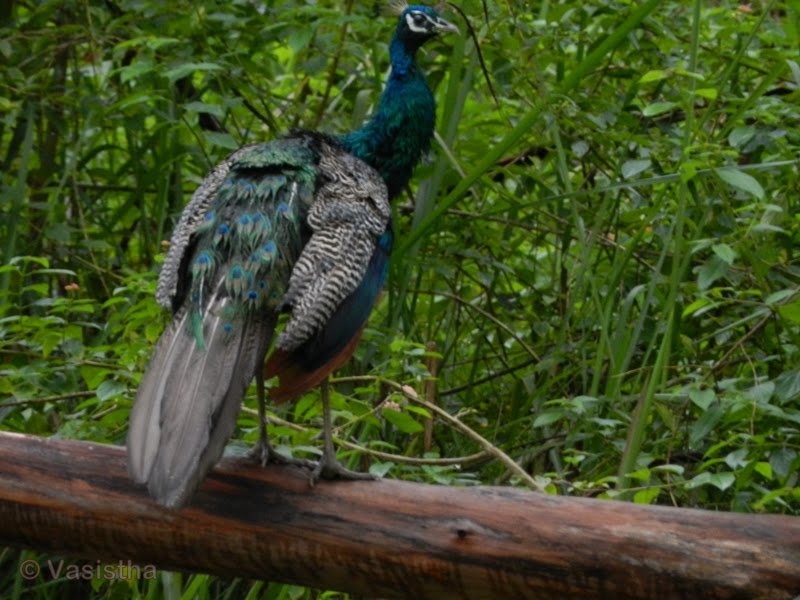
Wayanad Wildlife Sanctuary is an animal sanctuary in Wayanad, Kerala, south India. It is on the way from Mysore to Sultan Battery. Wild animals such as Indian Bison, elephant, deer and tiger has been spotted. There are also quite a few wild birds in the sanctuary.Peacocks and Peafowl tend to be very common in the area.

Wayanad Wildlife Sanctuary is the second largest wildlife sanctuary in Kerala. It is bestowed with lush green forests and rich wildlife. Also known as the Muthanga Wildlife Sanctuary, this wildlife area houses some of the rare and endangered species of both flora and fauna.

Established in 1973, the sanctuary is now an integral part of the Nilgiri Biosphere Reserve. It’s bounded by protected area network of Nagarhole and Bandipur of Karnataka in the northeast, and on the southeast by Mudumalai of Tamil Nadu.

It is part of the Wayanad plateau and the vegetation is predominantly of the south Indian moist deciduous teak forests. Also, the sanctuary has pastures of the west-coast semi-evergreen trees. The wildlife sanctuary comes under Protect Elephant and one can spot herd of elephants roaming in the area.

Elephant rides are arranged by the Forest Department,Kerala. Discovering and observing the wildlife while being atop an elephant is an enthralling and unforgettable experience. Wayanad district has the largest population of aborigine people in Kerala. The native aadivasis mainly consist of various sects like Paniyas, Kuruma s, Adiyar s, Kurichya s, Oorali s, Kattunaikkan s etc. Comprising an area of 2126 km2, Wayanad has a powerful history. Relicts and edicts found in various parts of Wayanad speak of an importatnt prehistoric era. Historians are of the view that organised human life existed in these parts, at least ten centuries before Christ.


The sanctuary is part of the Nilgiri Biosphere Reserve. The Western Ghats, Nilgiri Sub-Cluster (6,000+ km²), including all of the sanctuary, is under consideration by the UNESCO World Heritage Committee for selection as a World Heritage Site.[1]

Wayanad climate is salubrious. Average rain fall in this district is 2322 m.m. Annual rain fall in these high rain fall areas ranges from 3,000 to 4,000m.m. High velocity winds are common during the south west monsoon and dry winds blow in March-April. High altitude regions experience severe cold. This place experiences a high relative humidity which goes even up to 95 per cent during the south west monsoon period. Generally, the year is classified into four seasons, namely, cold weather, hot weather, south west monsoon and north east monsoon. The dale, 'Lakkidi', nestled among the hills of Vythiri taluk has the highest average rainfall in Kerala.


Location: Wayanad Wildlife Sanctuary is located 16 km east of Sulthan Bathery in the state of Kerala.

Edakkal Cave


The name “Edakkal” literally means “a stone in between”, and this describes how the cave is formed by a heavy boulder straddling a fissure in the rock. Inside the cave is on two levels, the lower chamber measures about 18 feet long by 12 feet wide and 10 feet high and can be entered through an opening of 5 x 4 feet. A passage opposite the entrance leads upward to a small aperture in the roof through which one climbs up to the next storey whose interior is about 96 feet long, 22 feet wide, and 18 feet high. Light enters the cave through a big gap at the right-hand corner of the roof where the boulder does not touch the facing wall.
The petroglyphs inside the cave are of at least three distinct types. The oldest may date back to over 8,000 years. Evidences suggest that the Edakkal caves were inhabited several times at different points in history.
The caves were accidentally discovered by Fred Fawcett, a police official of the erstwhile Malabar state in 1890 who immediately recognised their anthropological and historical importance. He subsequently wrote an article about them, attracting the attention of scholars.
The caves contain drawings that range over periods from as early as 5000 BC to 1000 BC. Recently the youngest group of paintings was in the news for a possible connection to the Indus Valley Civilization. Historian M.R. Raghava Varier of the Kerala state archaeology department identified a sign “a man with jar cup” that is the most distinct motif of the Indus valley civilization. The finding made in 2009 September indicates that the Harappan civilization was active in the region. 

Interestingly, the “a man with jar cup” symbol from Edakkal seems to be more similar to the Indus motif than those already known from Tamil Nadu and Karnataka. Mr. Varier said “The discovery of the symbols is akin to that of the Harappan civilisation having predominantly Dravidian culture and testimony to the fact that cultural diffusion could take place. It is wrong to presume that the Indus culture disappeared into thin air.” The scholar of Indus and the Tamil Brahmi scripts, Mr. Iravatham Mahadevan said the findings were very significant called it a "major discovery".

Location: located at Ambukutty Mala 25 km from Kalpetta.

Pazhassiraja Tomb


The tomb of the celebrated historical giant and reputed warrior Veera Pazhassi is a historical monument that has laid his great memories on the sands of time. It is a protected monument under the department. A small site museum is also functioning here.
Kerala Varma Pazhassi Raja belonged to kottayam royal family. He revolted against the British revenue policy by organising the tribals like Kurichiyas and Kurumbas of Wayanad. His strong guerilla warfare could successfully resist the wicked British forces several times. He succeded in winning the full support of his people in this long war with the foreign power. At last due to the ingratitude of some of his fellowmen, the 'Lion of Kerala' had to surrender. But before being captured by the British he is said to have committed suicide on 30th November 1805. The dead body of the great patriot was brought at Mananthavadi in the leadership of T.H.Baber the then sub collector of Malabar and buried there with all respect.

Wednesday, 15 June 2011

Pazhassiraja Museum & Art Gallery

          A veritable treasure trove for historians and connoisseurs of art, the Pazhassiraja Museum is located in Kozhikode - the land of spices which lured navigators from time immemorial down to the Portuguese explorer Vasco da Gama in 1498. The Art Gallery adjacent to the museum displays the acclaimed paintings of Kerala's cherished artists, Raja Ravi Varma (1848 - 1906) whose works brought international repute to the State and his uncle Raja Raja Varma. 
         The museum is managed by the State Archaeology Department and has on display mural paintings, antique bronzes, ancient coins, models of temples, umbrella stones, dolmenoid cists (quadrangular burial chambers with capstones), and similar megalithic monuments. For more information on Ravi Varma's works, refer 'The prince among painters and a painter among princes' .

Pazhassiraja Museum
The museum and the art gallery are named after the great Pazhassiraja Kerala Varma of the Padinjare Kovilakom of the Kottayam royal family. The famous 'Pazhassi Revolt' (against the British East India Company during the second half of the 1700s) was led by Pazhassiraja. Nicknamed the Lion of Kerala, Pazhassiraja is also credited with introducing guerilla warfare in the hills of Wayanad to resist the increasingly intolerable British colonialism. This great freedom fighter was shot dead in an encounter on 30 November 1805.

Pazhassiraja Art Gallery


Location:  About 5 km from Kozhikode town at East Hill, Kozhikode.

Details: Visiting time from 9.00 am to 4.30 pm.  Break from 1.00 pm to 2.00 pm. Closed on Mondays and other public holidays. Ph: +91 - 495 - 2384382.

Friday, 3 June 2011

Nilambur Teak Museum

              Only 4Km, away from Nilambur, on the side of Nilambur-Gudallur road, is world’s first Teak Museum and a sub center of Kerala Forest Research Institute. In the Teak Museum, a visitor can have at hand, information on all aspects of teak. The museum, arranged in a two storied building, exhibits articles and details of historic, aesthetic and scientific value.
          Eighteen Km, away from Nilabur, is Nedumkayam where the rain forests flourish. Form the wooden rest house built by the Britishers, elephants and deer can be viewed. An elephant-taming center is also there. Half an hour jeep journey through the thick forests from Nedumkayam, leads to Mancherri, the settlement of Chola Naickas, a primitive tribe.
          Beyond Chaliyar river, 27 Km. From Nilambur, is Valamthode, a hill top place where a perennial waterfall attracts people. This too is a tribal settlement. Road accessibility is through Kozhikode district by Areekode-Mukkam Road. Nilambur town is famous for kovilakams where the Rajas resided and ruled the land. The Kovilakams have beautiful frescoes and art works in wood. The forest division offices (Nilambur North & South) are functioning from here.

Location: It is the terminus of Shornur-Nilambur railway and it is 40 Kms from Malappuram town. Only 4km from Nilambur.

Thursday, 2 June 2011

Thrissur Zoo and Art Museum


Art Museum
Thrissur Zoo  is 13.5 acres (5.5 hectare) zoo, which opened in 1885 in the heart of the city of Thrissur in Kerala, India. This is one of the oldest zoos in the country, and is home to a variety of animals, reptiles and birds. The compound zoo houses a museum of natural history and art that emphasize the socio-cultural heritage of the region. The museum displays the art collections of woodcarvings, metal sculptures and antique jewelry.
Tiger
Museum and Zoo are locked into the same fresh grass, flowers area of ​​13.5 hectares which is home to a truth of endangered species and a famous snake park.The Art Museum housed in a separate building is a feast for art lovers. She was beautiful and rare exhibition of sculpture, religious idols, celebrities Kathakali, Kerala's traditional jewels and votive objects, a collection of traditional lamps really delicious.
Owl
Parrot Chicks
Animal lovers, Thrissur zoo is located, 2 km from the city center within the complex of different species such as lion-tailed macaque, Sloth bear, birds and deer. Snake Park is a collection of reptilian King Cobra, Kraits, snakes and rat snakes.

Location: only 2 km from the city of Thrissur.
Details: Visiting time of Museum: 10.00 am - 05.00 pm. Visiting time of Zoo: 9.30 am to 6.30 pm.  Monday will be a holiday.

Tuesday, 31 May 2011

Museum of Kerala History

Museum of Kerala History

                 One of the best and important place in Ernakulam is the Museum of kerala History. The Museum of the History of Kerala in Cochin city of Kerala is not  an ordinary museum. Importance of the museum "living" is that it tells the story through the spectacular light and sound show and informative. Here you can view a description based on the life stories of 87 prominent personalities who played a key role in shaping the future of Kerala. A popular haunt for tourists, local students and intellectuals, the museum highlights the history of Kerala for everyone, ranging from the early days of the people of Kerala today.

A Painting
There is an emphasis on social, cultural and literary narrative. Kerala's history is represented in 36 visual light shows and sound that covers the history for the past 2000 years. The names of some tracks in the sound and light are the first peoples, and Senguttavan Ezhimala Nanna Venmans Ilango Ay Andiran Pothiyilmala Aryan migration, St. Thomas, Shankaracharya, Alwar and Kulasekhara Cheraman Perumal Nayanar.

Kerala History Museum was designed by R Madhavan Nayar, general manager of the end of the Foundation Madhavan Nayar. It was a great industrial philanthropist and a pioneer in the seafood industry for export to India. It was a great connoisseur of art as well, which is the main reason they built the museum. Besides the exhibition of light and sound, the other major attractions of the museum includes a special gallery for paintings and sculptures. Primarily represents the Indian contemporary art exhibitions in a period of 200 years.
A painting
Works by the Company of the school's paintings are "breeding" Bengal School, the group of progressive artists, Indian Law Summary, narrative painter and mystic style symbolic bridge. The splendid Dolls Museum here needs special mention. Perhaps unique in South India, this museum has a collection of 150 dolls. Each is handmade and comes from different states of India, from Kashmir to Kanyakumari. Dolls through their clothing, hairstyles and jewelry, which reflects the socio-cultural tradition in their country.
Museum of Kerala History-Entrance

Location: It is situated at a distance of 10 km from Ernakulam.
Details: Visiting time from 10.00 am to 12 noon and 2.00 pm to 4.00 pm on all days except on Mondays.

Hill Palace Museum

Hill Palace
Hill Palace is the largest archaeological museum of Kerala, near Tripunithura, Kochi. It 'was an administrative officer of the Kochi Rajas. Built in 1865, the palace complex consists of 49 buildings in traditional architectural style is spreading everywhere is 54 acres (220,000 m2). The complex is an archaeological museum, the Heritage Museum, Deer Park, the prehistoric park and a playground for children. Surrounding the Town Hill is a rare medicinal plants.
Hill Palace
Centre for Heritage Studies (CHS) is an independent research and educational institution established by the Department of Cultural Affairs, Government of Kerala is also working on the site. CHS was designated as "Conservation Centre manuscripts (MCC) and Manuscript Resource Centre (MRC) of the National Mission for Manuscripts.
The museum displays 14 categories of exhibits, including murals, paintings, sculptures in stone and plaster of paris, manuscripts, inscriptions, sculptures, etc. The exhibits in the museum are mainly from the royal family of Cochin. Some other parts are of Travancore Royal House, Devaswom Paliam and the Department of Archaeology. It has a golden crown encrusted with precious stones and many valuable coins, ornaments, majestic beds and samples of epigraphy.
Location: The building is about 12 km from the mainland Ernakulam and easily accessible by road. 

Details: Currently, the castle was transformed into a museum and is open to the public every day except Monday 9:00 to 12:30 and 2:00 p.m. to 4:30.

Tea Museum

                                                                              A Tea Museum opened by Tata Tea appropriately at Munnar, the veritable tea country, is the latest attraction of the region. The museum house curios, photographs and machineries highlighting the path tea industry in the region have taken over the years. Set up at the Nallathanni Estate of Tata Tea, the museum is a tribute to the efforts of Munnar’s early residents who toiled hard to transform Munnar into a major plantation centre of Kerala.
The museum shows the growth of Munnar tea estates through displays like the rudimentary tea roller to the modern fully automated tea factory. A sundial, placed on a granite block, which was made in 1913 by the Art Industrial School at Nazareth, Tamil Nadu, greets the visitor to the museum. A burial urn from the second century BC found near Periakanal estate lends a sense of antiquity.

Other attention grabbers include the original tea roller, the 'Rotor vane,' dating back to 1905, used for CTC type tea processing; the 'Pelton Wheel' used in the power generation plant that existed in the Kanniamallay estate in the 1920s; a rail engine wheel of the Kundale Valley Light Railway that shuttled men and material between Munnar and Top Station during the first half of the last century.
Tea Museum
A section of the museum also houses classic bungalow furniture, typewriters, wooden bathtub, magneto phone, iron oven, manual calculators and EPABX of the1909 telephone system.

Deatils: 
Timing: Open 7 days a week from 10:00 a.m. to 05:00 p.m.
Entry Fee: Adults: Rs.50, Children below 12 years: Rs.10                        
Address: Tata Tea Museum Nalluthanni Estate Munnar, Idukki District.   

Friday, 27 May 2011

The Napier Museum


                                     The Napier Museum is an art and natural history museum situated in Thiruvananthapuram (Trivandrum), the capital city of Kerala, India. The museum was established in 1855. In 1874, the old Museum Building was demolished and foundation for the new building was laid. The new building was named after Lord Napier, the Governor of Madras from 1866-1872.   
              The architectural masterpiece was designed by Robert Chisholm, the consulting Architect of the Madras Government and the construction was completed in 1880. Napier Museum is a landmark in the city with its unique ornamentation and architectural style with gothic roof and minarets. The Indo-Saracenic structure also boasts a natural air conditioning system.
            The museum houses a rare collection of archaeological and historic artifacts, bronze idols, ancient ornaments, a temple chariot and ivory carvings. It also contains the Sri Chitra Art Gallery, which contains works from Raja Ravi Varma and Nicholas Roerich, as well as examples of Mughal and Tanjore art.
Location: The Museum is situated right in the heart of the city, near the zoological park.
Details: Visiting time 10:00 am to 5:00 pm on all days except Mondays and Wednesday forenoon. Phone: 2316275 / 2318294
Related Posts Plugin for WordPress, Blogger...